
Family-owned · Minneapolis Local
Residential Painting That Starts With Proper Preparation
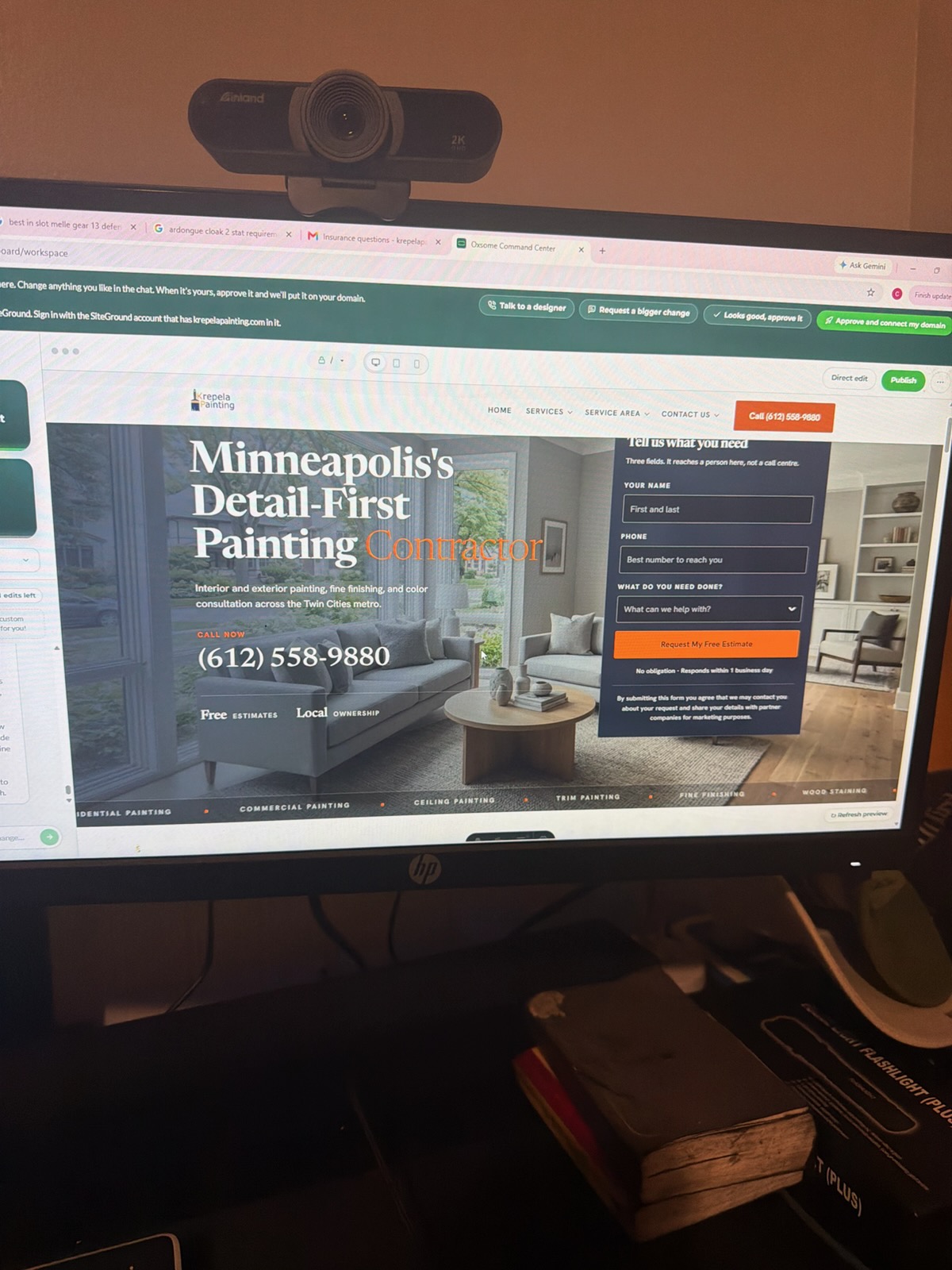
Interior and exterior residential painting across the Twin Cities metro, done by the person who quoted you.
Free estimate
Tell us what you need
Three fields. It reaches a person here, not a call centre.
What separates a lasting paint job
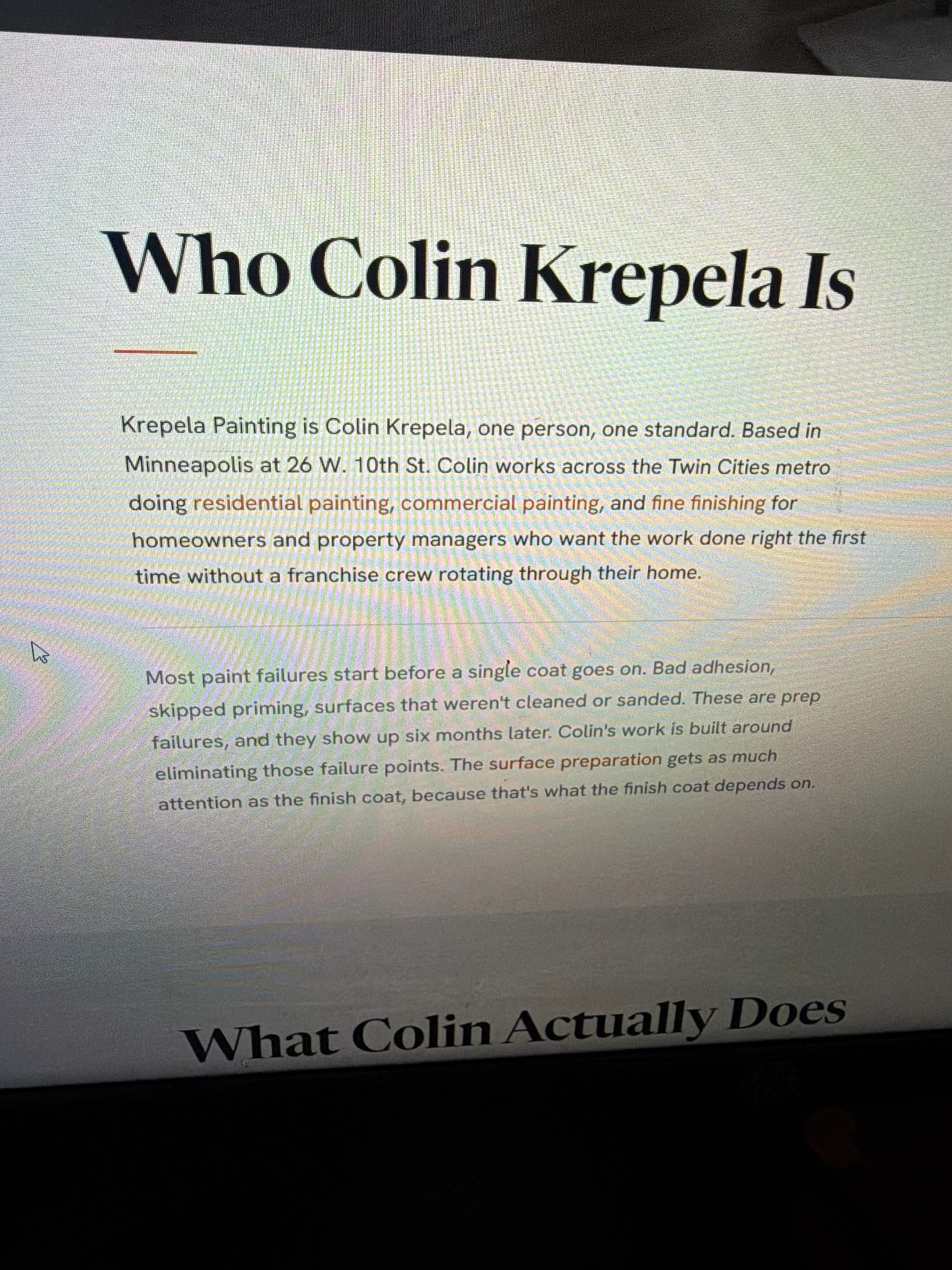
Most residential painting failures aren't a paint problem. They're a prep problem. A coat of premium paint applied over a dirty, chalking, or poorly sanded surface will peel, crack, and look tired within a couple of seasons regardless of what the can cost. At Krepela Painting, surface preparation isn't a step we rush to get to the fun part. It's the job. Colin works with homeowners across the Twin Cities metro to get walls, trim, and exteriors properly cleaned, repaired, and primed before a brush touches finish coat. If you're comparing quotes and one is notably cheaper, ask specifically what their prep process covers. Request your free estimate and find out what a thorough assessment looks like.
Residential painting projects vary more than most people expect. A single-room refresh with minimal patching might be a straightforward day's work. A full exterior repaint on a two-story older home with failing caulk, wood rot to address, and multiple substrate types is a multi-day project with significantly more preparation involved. What drives cost on any residential painting job: the total square footage, the current condition of the surfaces, how many coats the substrate actually needs, the type of finish and coating selected, and access challenges like high ceilings or difficult soffits. Every job is different. Contact Krepela Painting for an accurate estimate.
THE PROCESS
How a residential paint job actually gets done actually
- 01
Surface Assessment and Preparation
Every project starts with a walk-through to identify failing paint, moisture damage, cracks, nail pops, and caulk gaps. We address those before anything else. Scraping, sanding, patching, priming specific problem areas. You can't paint over a problem and expect it to stay hidden.
- 02
Premium Coatings Applied Correctly
The right primer for the substrate, the right finish sheen for the space, and the right number of coats. We don't skip primer to save time, and we don't thin paint to stretch coverage. What goes on the wall is what's specified for that surface.
- 03
Clean Finish and Final Walkthrough
Crisp edges on trim, clean lines at ceilings, no lap marks in the field. We do a final walkthrough with you before we call a project complete. If something's off, we fix it. That's not a policy. It's just how the work gets done.
Interior painting done without shortcuts
From a single room to a full home repaint, the prep and process are the same.
Room Repaints
Bedrooms, living rooms, kitchens, hallways. Full-room prep including wall repairs, sanding, priming, and two finish coats. Color changes handled properly so the old color doesn't bleed through.
Trim and Baseboards
Trim work requires a steadier hand and different paint chemistry than walls. We use appropriate alkyd or waterborne alkyd finishes on trim for a harder, more durable surface that resists scuffs and cleans up easily.
Ceilings
Ceiling paint is not wall paint. Flat ceiling finishes hide roller texture and don't create sheen that catches light unevenly. We cut clean lines at the ceiling-wall junction rather than masking and pulling a rough edge.
Move-In and Refresh Projects
Buying a house or turning over a rental? A fresh paint job is one of the highest-return updates you can make before moving in. We can prioritize rooms and sequence the work around your timeline.
EXTERIOR
Exterior painting built for Minnesota winters
- Power washing and surface cleaning before any coating
- Scraping and sanding all failing or chalking paint
- Spot priming bare wood and repaired areas
- Recaulking window frames, trim joints, and penetrations
- Premium exterior coatings applied within manufacturer temperature specs

What to know before choosing a residential painter
- 01
Ask exactly what surface prep is included
Not 'do you do prep' but what specifically. Scraping? Sanding between coats? Spot priming? If they can't give you a specific answer, the prep is probably minimal.
- 02
Confirm who does the actual work
Some painting contractors quote the job and subcontract the execution. With Krepela Painting, Colin quotes the job and Colin does the work. That's not common at every scale of operation.
- 03
Understand what coating is being applied
There's a meaningful quality range in paint products. Ask the brand and product line going on your surfaces. A lower-cost job often means lower-grade coatings, not just less labor.
- 04
Get the scope in writing before work starts
Number of coats, surfaces included, how wall repairs are handled, what the cleanup process looks like. A detailed written scope protects both of you. We document the work before we start.
Start here
Tell us about your residential project
Whether it's one room or the full exterior, start with a free estimate. We'll walk the project, give you a clear scope, and answer whatever questions you have before you commit to anything.
(612) 558-9880Or send it in writing
Three fields, thirty seconds
COLOR
Picking the right color before we start
Frequently asked questions about residential painting
How many coats of paint does a typical residential interior wall need?
What sheen level should I use for interior walls versus trim?
How long does exterior paint need to cure before it can handle Minnesota rain and cold?
Do I need to move furniture before an interior painting project?
What causes paint to peel on exterior wood siding, and how do you fix it?
Can you paint over wallpaper, or does it need to be removed first?
Twin Cities metro coverage
Krepela Painting works throughout the greater Twin Cities metro. We cover a wide range of neighborhoods and suburbs, from inner-ring communities to outer metro.
- Saint Paul
- Golden Valley
- Richfield
- Crystal
- Fridley
- New Hope
- Lauderdale
- Brooklyn Park
- Edina
- St. Louis Park
- Hopkins
- Minnetonka
- Bloomington
- Plymouth
- Maple Grove
- Eden Prairie
- Burnsville
- Eagan
Ready to start your residential painting project?
Request a free estimate and get a straight answer on scope, process, and timing.